
Research & Insights
Leaf Spring Mounting: Types, Benefits, Applications and Selection Guide
Leaf spring mounting is an important component in vehicle suspension systems, helping secure the leaf spring assembly while allowing controlled movement between the suspension and chassis. A properly designed mounting solution can improve ride stability, reduce vibration and support reliable vehicle performance under varying load conditions.
For commercial vehicles, trucks, buses, trailers and other applications that use leaf spring suspension, the mounting arrangement plays an important role in managing suspension movement and transferring loads effectively. Rubber and elastomer-based mounting components can also help reduce noise, vibration and harshness (NVH) while protecting connected components from excessive shock and vibration.
What Is Leaf Spring Mounting?
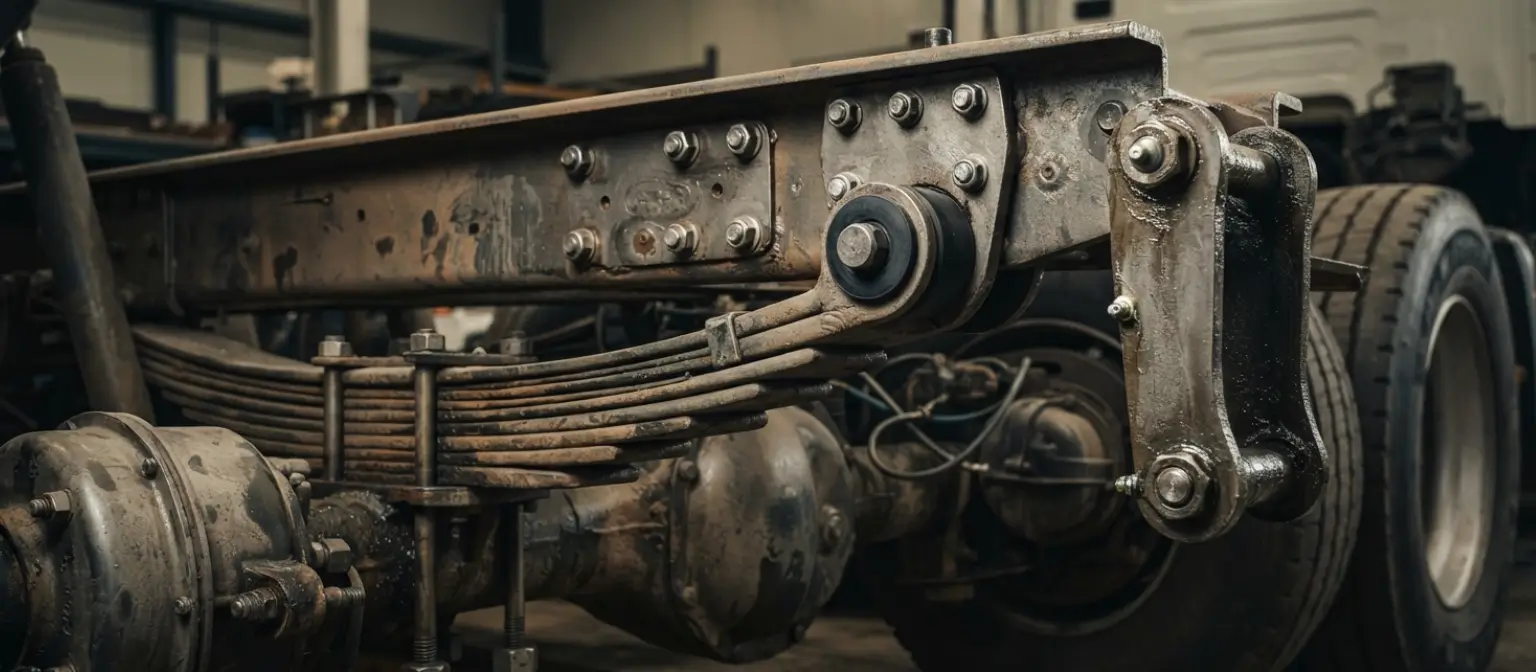
Leaf spring mounting refers to the components and mounting points used to connect a leaf spring suspension assembly to the vehicle chassis or frame. These mounting arrangements allow the leaf spring to support the vehicle while accommodating the movement that occurs as the suspension responds to road conditions.
A leaf spring typically has fixed and moving mounting points. The front eye may be connected to a fixed hanger, while the rear eye can use a shackle arrangement that allows the spring to change length slightly during suspension movement. Depending on the vehicle design, bushes, pins, hangers, shackles and other mounting components work together to provide controlled suspension movement.
Quick answer: Leaf Spring mounting connects the leaf spring assembly to the vehicle frame and enables controlled suspension movement while supporting vehicle loads and helping manage vibration.
Why Is Leaf Spring Mounting Important?
Leaf springs carry significant loads and are continuously exposed to road shocks, vibration and changing suspension forces. The mounting system therefore needs to provide adequate strength while allowing the required movement.
A suitable mounting arrangement can provide several benefits:
-
 Supports the leaf spring securely
-
Allows controlled suspension movement
-
Helps distribute suspension loads
-
Reduces transmission of vibration to the chassis
-
Helps minimise noise and harshness
-
Protects mounting points from excessive impact
-
Contributes to better suspension stability
-
Supports longer service life of associated components
For commercial vehicles that frequently carry heavy loads, the quality and design of leaf spring mounting components become particularly important.
Types of Leaf Spring Mounting Components
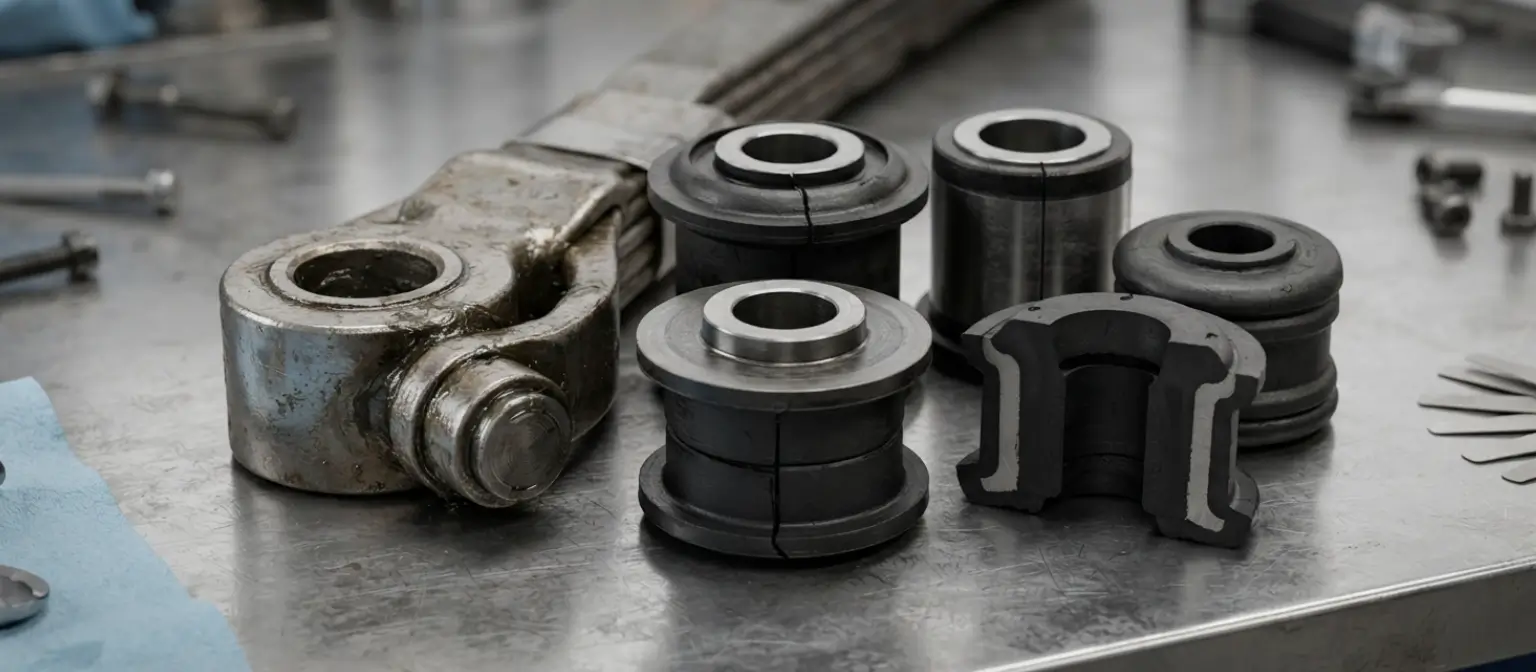
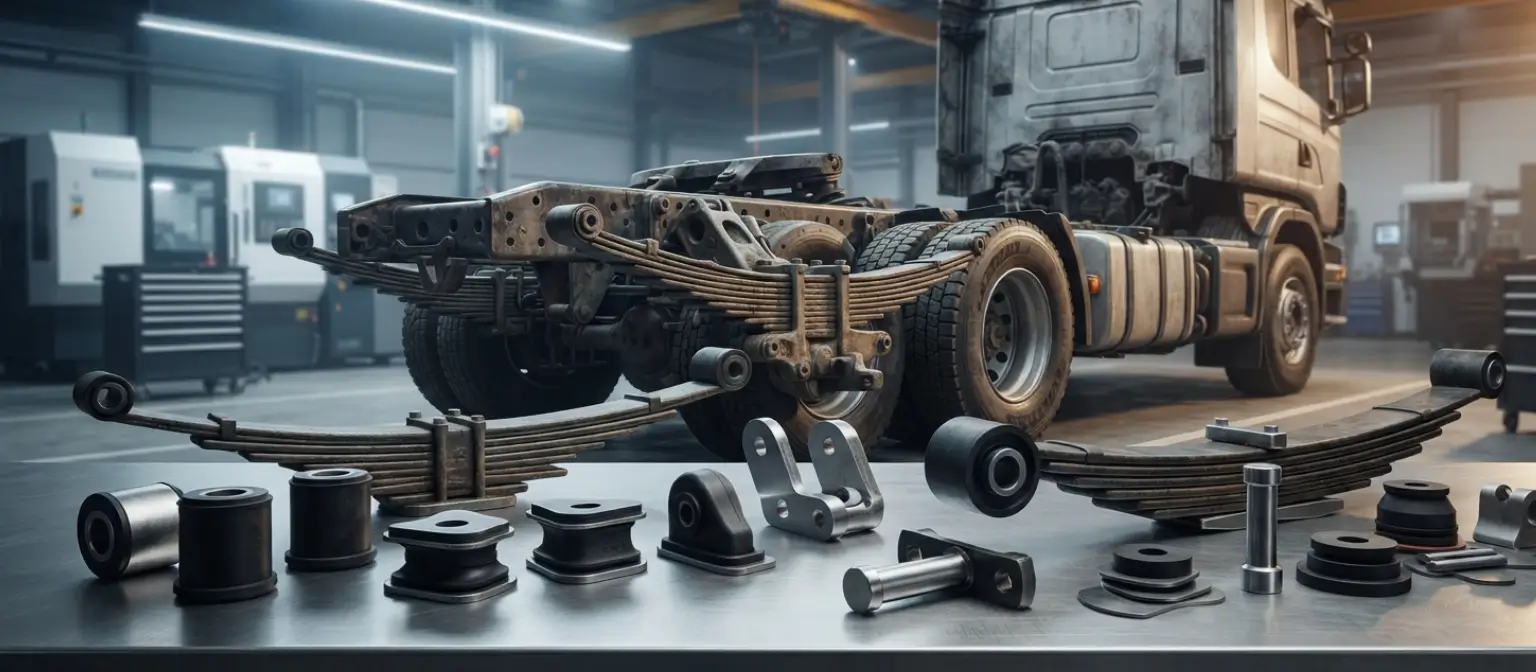
Different components may be used depending on the suspension design and vehicle application.
1. Leaf Spring Bushes
Leaf spring bushes are installed at spring eyes or other pivot locations. They provide a connection between the spring and mounting hardware while allowing controlled movement.
Rubber bushes are widely used because elastomer materials can provide flexibility and vibration isolation. The correct bush material and hardness depend on factors such as load, operating environment and suspension design.
2. Spring Hangers
Spring hangers provide mounting points for the leaf spring and are generally attached to the vehicle chassis. They need to withstand repeated loads generated during normal driving and suspension movement.
3. Shackles
A shackle connects the spring to the chassis while allowing the leaf spring to change its effective length as it flexes. The shackle therefore supports suspension articulation without restricting the natural movement of the spring.
4. Mounting Pins and Hardware
Pins, bolts and related hardware secure the leaf spring to the mounting arrangement. These components must be correctly sized and installed to withstand repeated loading.
Benefits of Rubber-Based Leaf Spring Mounting
Rubber and elastomer components are frequently used in suspension mounting applications because they can combine load support with flexibility and vibration isolation.
A rubber leaf spring bush can absorb and dampen a portion of the vibration generated by road irregularities. This can help reduce the amount of vibration transferred from the suspension to the vehicle chassis.
Key benefits can include:
-
Vibration isolation: Elastomer materials can
help reduce vibration transmission between connected
components.
-
Noise reduction: Properly designed rubber
mounting components can reduce unwanted suspension-related
noise.
-
Controlled flexibility: Rubber allows
movement while maintaining a secure connection between
components.
-
Shock absorption: Elastomer components can
help manage sudden loads and impacts within their designed
operating range.
-
Reduced metal-to-metal contact: Bushes can
separate metallic components, helping reduce direct contact
and associated wear.
How Does Leaf Spring Mounting Work?
When a vehicle travels over an uneven surface, the leaf spring bends and changes position to absorb and manage road forces. The mounting system allows this movement while keeping the spring connected securely to the chassis.
At a fixed mounting point, the spring remains connected to the chassis through the appropriate hardware and bush. At the moving end, a shackle or similar mechanism allows the spring to move as its effective length changes during deflection.
The mounting bush provides controlled compliance at the connection. Its characteristics influence how loads and vibration are transmitted between the suspension and chassis.
This combination of structural support and controlled flexibility is essential for effective leaf spring suspension performance.
Applications of Leaf Spring Mounting
Leaf spring mounting systems are commonly found in vehicles and equipment where robust suspension and load-carrying capability are required.
Typical applications include:
-
Heavy commercial trucks
-
Light commercial vehicles
-
Buses
-
Trailers
-
Pickup vehicles
-
Agricultural vehicles
-
Utility vehicles
-
Industrial transport equipment
-
Off-road vehicles
-
Special-purpose vehicles
The exact mounting configuration varies according to vehicle weight, suspension design, operating conditions and required load capacity.
How to Select Leaf Spring Mounting Components
Choosing the right leaf spring mounting component requires consideration of the complete operating environment rather than only the physical dimensions.
Important factors include:
Load Capacity
The component must be suitable for the loads generated by the vehicle and suspension system. Heavy-duty applications may require materials and designs capable of handling high and repeated loads.
Material
Rubber and other elastomer compounds can be formulated for different performance requirements. Material selection should consider load, flexibility, temperature and environmental exposure.
Operating Temperature
Suspension components may experience changing temperatures during vehicle operation. The selected elastomer should maintain suitable performance across the expected temperature range.
Environmental Conditions
Exposure to water, dust, oil, road contaminants and other environmental factors can affect mounting components. Material compatibility with the operating environment is therefore important.
Durability
Leaf spring mounting components experience repeated movement and loading. Fatigue resistance and long-term durability should be considered when selecting a component.
Dimensional Accuracy
Correct dimensions and fit are essential for proper installation and suspension operation. The bush or mounting component should match the specified mounting arrangement.
Common Signs of Leaf Spring Mounting Wear
Worn mounting components can affect suspension performance. Depending on the application, potential signs may include unusual suspension noise, excessive movement, vibration or visible deterioration of rubber components.
Other indications can include:
-
Cracked or damaged bushes
-
Excessive play around mounting points
-
Abnormal suspension movement
-
Increased vibration
-
Unusual knocking sounds
-
Uneven suspension behaviour
Regular inspection can help identify worn components before they contribute to larger suspension problems.
Why Quality Matters in Leaf Spring Mounting
Leaf spring suspension systems operate under repeated and sometimes severe loading conditions. A mounting component that does not meet the required specifications can affect the performance of the entire suspension assembly.
High-quality elastomer mounting solutions should be designed with the application requirements in mind, including load conditions, movement, environmental exposure and expected service life.
For manufacturers and replacement-part suppliers, working with an experienced rubber and elastomer component manufacturer can also help ensure that mounting solutions are developed according to specific technical requirements.
Frequently Asked Questions About Leaf Spring Mounting
What is leaf spring mounting?
Leaf spring mounting is the system used to connect a leaf spring assembly to a vehicle chassis while allowing the controlled movement required during suspension operation.
What is the purpose of a leaf spring bush?
A leaf spring bush provides a flexible connection between the spring and mounting hardware. It can help accommodate suspension movement while reducing vibration and noise transmission.
Where are leaf spring mountings used?
Leaf spring mountings are used in trucks, buses, trailers, commercial vehicles, utility vehicles, agricultural equipment and other vehicles using leaf spring suspension systems.
Are rubber bushes suitable for leaf spring mounting?
Rubber bushes can be suitable for many leaf spring mounting applications because they provide controlled flexibility and vibration isolation. The compound and design should be selected according to the specific application.
How can leaf spring mounting life be improved?
Correct component selection, proper installation, suitable material selection and regular inspection can help support longer service life. Operating conditions and load requirements should also be considered.
Leaf Spring Mounting Solutions for Vehicle Applications
Leaf spring mounting is a key part of a dependable suspension system. From bushes and hangers to shackles and related components, every part must work together to support vehicle loads while permitting controlled suspension movement.
Elastomer-based mounting components can provide an effective combination of flexibility, vibration isolation and durability when engineered for the intended application. For vehicle manufacturers, OEMs and replacement-component requirements, selecting the appropriate material, dimensions and design is essential for reliable performance.
Elasto Mount can support application-specific requirements with rubber and elastomer mounting solutions designed around the functional needs of suspension and vibration-control systems.